
Small Batch Biscuits Without Buttermilk: 5 Flaky Secrets for Perfect Biscuits
Small batch biscuits without buttermilk are easy to make with regular milk, cold butter, flour, baking powder, and a few basic pantry ingredients.
The secret to tall, flaky biscuits is keeping the butter cold, handling the dough gently, folding it a few times, and baking it in a very hot oven.
Sometimes you want warm homemade biscuits without making a tray big enough for a family gathering.
And sometimes you open the refrigerator only to realize there is no buttermilk.
That is exactly when these small batch biscuits without buttermilk make sense.
This recipe makes about four generously sized biscuits, uses ordinary milk, and needs no vinegar, lemon juice, or homemade buttermilk substitute.
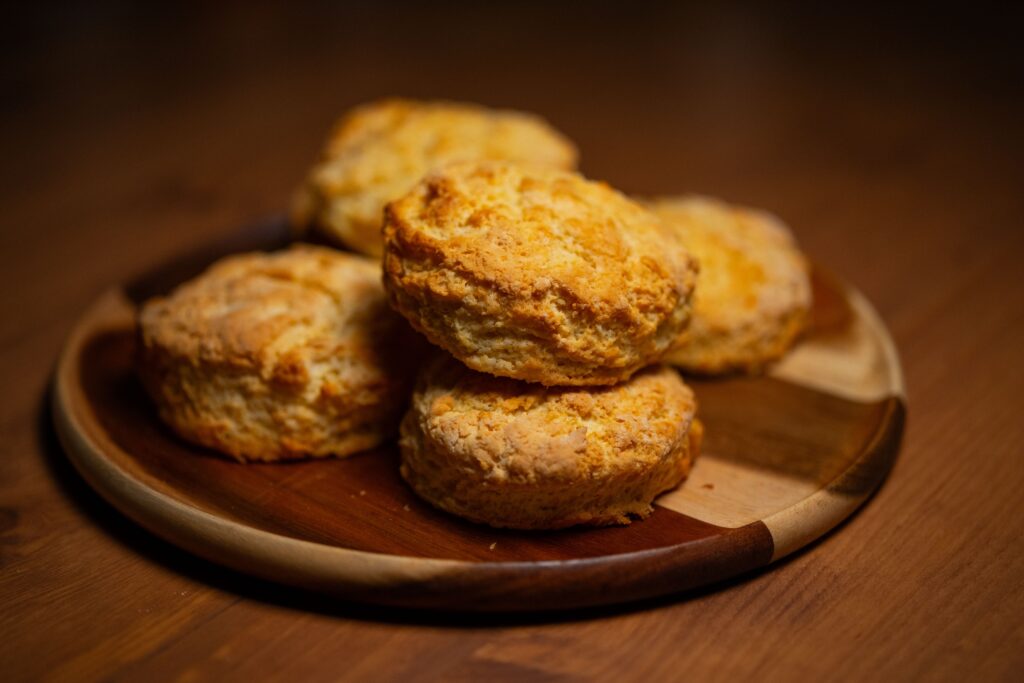
You get buttery layers, golden tops, soft centers, and crisp edges without dealing with a large amount of leftover dough.
They are perfect with eggs in the morning, butter and jam at brunch, alongside soup at dinner, or warm from the oven when you simply want something homemade.
If you are building your small-batch breakfast rotation, these biscuits pair naturally with small batch pancakes for two without buttermilk and small batch waffles for two without buttermilk.
Small Batch Biscuits at a Glance
| Recipe Detail | Information |
|---|---|
| Yield | About 4 biscuits |
| Servings | 2 |
| Prep time | 12 minutes |
| Bake time | 12–15 minutes |
| Total time | About 27 minutes |
| Buttermilk needed? | No |
| Milk | Regular whole milk |
| Oven temperature | 425°F / 220°C |
| Best butter | Very cold unsalted butter |
| Difficulty | Easy |
| Best texture | Flaky layers, tender center |
| Freezer friendly | Yes |
Quick Answer: How Do You Make Biscuits Without Buttermilk?
To make small batch biscuits without buttermilk, mix flour, baking powder, salt, and a little sugar.
Cut very cold butter into the flour until you have small flakes and pea-sized pieces.
Add cold regular milk and stir only until a shaggy dough forms.
Pat the dough into a rectangle, fold it over itself a few times to create layers, then cut four biscuits and bake at 425°F / 220°C for about 12 to 15 minutes.
You do not need buttermilk because this recipe uses baking powder for its main lift.
Regular whole milk supplies the moisture needed to bring the dough together while cold butter creates the flaky layers.
Why You’ll Love These Small Batch Biscuits
A biscuit recipe does not have to make 12 biscuits to be worth turning on the oven.
These small batch biscuits without buttermilk are designed specifically for smaller households.
They Make a Sensible Amount
The recipe makes about four biscuits.
That is enough for:
- Two people at breakfast
- One person with leftovers
- A small brunch
- A quick side for dinner
You get fresh biscuits without filling your kitchen with leftovers.
No Buttermilk Required
You do not need to buy a carton of buttermilk for one recipe.
Cold whole milk works well here.
In fact, King Arthur Baking’s current biscuit guidance notes that whole milk can replace buttermilk in biscuits, with slightly less milk added initially because whole milk can hydrate the dough differently. See King Arthur Baking’s biscuit guidance
Basic Ingredients
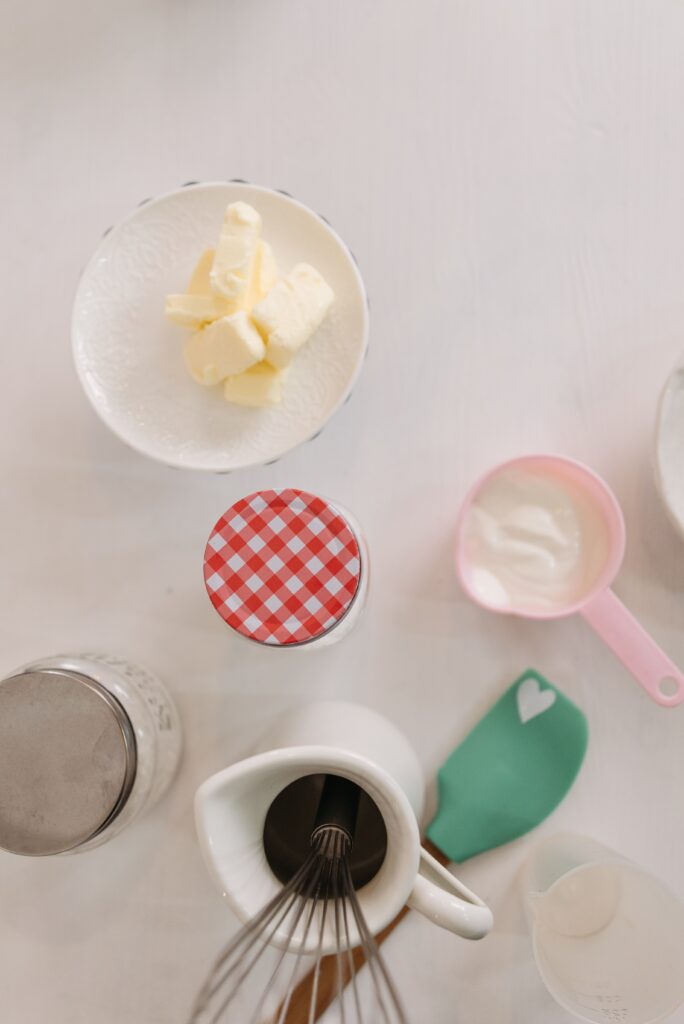
You probably already have most of what you need:
- Flour
- Baking powder
- Salt
- Butter
- Milk
A little sugar is optional but helps balance the flavor and encourage browning.
Less Waste
Small batch baking lets you enjoy something fresh without committing to a huge recipe.
That is especially useful when cooking for one or two people.
They Work Beyond Breakfast
Serve them with:
- Eggs
- Sausage
- Chicken
- Soup
- Chili
- Jam
- Honey
- Butter
They are simple enough to fit almost anywhere.
Ingredients for Small Batch Biscuits Without Buttermilk
You only need a short ingredient list.
Dry Ingredients
- 1 cup all-purpose flour, about 120 grams
- 1½ teaspoons baking powder
- ¼ teaspoon fine salt
- 1 teaspoon granulated sugar, optional
Cold Ingredients
- 4 tablespoons unsalted butter, very cold
- 6 tablespoons cold whole milk
- 1 additional tablespoon milk only if needed
Optional for the Top
- 1 tablespoon milk for brushing
- Melted butter after baking
The ingredient list is intentionally simple.
The technique matters more than adding extra ingredients.
Why Regular Milk Works Without Buttermilk
Buttermilk is common in biscuit recipes because it adds acidity, moisture, and a slight tang.
But it is not essential.
These small batch biscuits without buttermilk rely primarily on baking powder, which already contains the acid and base needed for leavening.
That means you do not need an acidic dairy ingredient to activate the rise.
Regular whole milk gives the dough enough moisture while keeping the flavor mild and familiar.
Whole milk is my first choice because its fat content contributes richness.
You can also use 2% milk, though the biscuits may be slightly less rich.
The main thing is to keep the milk cold.
Cold ingredients help keep the butter solid until the biscuits reach the hot oven.
How to Make Small Batch Biscuits Without Buttermilk
The method is straightforward, but biscuits reward careful handling.
Step 1: Preheat the Oven
Set your oven to:
425°F / 220°C
Place a rack in the upper-middle portion of the oven.
Line a small baking sheet with parchment paper.
A hot oven is important because biscuits need strong heat immediately.
That heat helps the moisture in the butter and dough create steam, pushing the layers upward.
Step 2: Mix the Dry Ingredients
In a medium bowl, whisk together:
- Flour
- Baking powder
- Salt
- Sugar
Whisk for about 20 seconds.
This distributes the baking powder evenly.
Uneven leavening can lead to one biscuit rising beautifully while another stays squat.
Step 3: Keep the Butter Very Cold
Cut the cold butter into small cubes.
If your kitchen is particularly warm, place the cubed butter in the freezer for 5 minutes before continuing.
Cold butter is one of the biggest secrets behind flaky small batch biscuits without buttermilk.
Once the biscuits enter the oven, water inside those butter pieces turns to steam.
That steam helps separate the dough into layers.
If the butter melts before baking, you lose much of that effect.
Step 4: Work the Butter Into the Flour
Add the cold butter cubes to the dry ingredients.
Use your fingertips, a pastry cutter, or two forks.
Work quickly until the mixture contains:
- Some small crumb-like pieces
- Several pea-sized pieces
- A few thin butter flakes
Do not try to completely blend the butter into the flour.
Visible butter is good.
Those irregular pieces help create a more interesting flaky structure.
Step 5: Add Cold Milk
Start with:
6 tablespoons cold whole milk
Pour it over the flour mixture.
Use a fork or flexible spatula to stir gently.
Stop as soon as a shaggy dough begins forming.
The bowl may still contain a few dry areas.
That is okay.
If the dough genuinely will not come together, add another teaspoon or tablespoon of milk.
Do not automatically pour in all the extra milk.
A wet biscuit dough can spread rather than rise tall.
Step 6: Turn Out the Dough
Lightly flour your work surface.
Tip the shaggy dough onto it.
Bring the dough together gently with your hands.
Do not knead it like bread.
The goal is simply to gather the pieces into one rough rectangle.
The Folding Trick for Flaky Biscuit Layers
This is where small batch biscuits without buttermilk become noticeably better.
Pat the dough into a rectangle about:
½ to ¾ inch thick
Then fold it like a letter:
- Fold the top third toward the center.
- Fold the bottom third over it.
- Rotate the dough 90 degrees.
- Pat it out again.
- Repeat the fold two more times.
You do not need a rolling pin.
Your hands are usually enough.
The folds stack alternating layers of dough and butter.
When those layers hit the oven, they separate and rise.
Do Not Overwork the Dough
Three gentle folds are enough.
More is not automatically better.
Overhandling can:
- Warm the butter
- Develop too much gluten
- Make biscuits tougher
- Compress the layers
The dough should still look slightly rustic.
That is exactly what you want.
How to Cut Biscuits for the Best Rise
After the final fold, pat the dough to about:
¾ to 1 inch thick
You have two good options.
Option 1: Cut Square Biscuits
This is my favorite method for a small batch.
Use a sharp knife or bench scraper and cut the dough into four squares.
Why squares?
There are no scraps.
No rerolling.
No wasted dough.
And because every bit of dough stays in its original layered state, the biscuits rise more evenly.
Option 2: Use a Round Biscuit Cutter
Press the cutter straight down.
Then lift it straight up.
Do not twist.
Twisting can press the edges together and make it harder for the biscuit to rise cleanly.
For a small recipe, square biscuits are easier and more efficient.
Should Biscuits Touch While Baking?
It depends on the texture you prefer.
For Crispier Sides
Space the biscuits about 1 to 2 inches apart.
Hot air reaches more of the surface.
For Softer Sides
Place the biscuits closer together.
They support one another while rising and the sides stay softer.
For small batch biscuits without buttermilk, I usually leave a little space because I like golden edges.
5 Flaky Secrets That Make the Biggest Difference
These are the details worth remembering.
1. Keep Everything Cold
Cold butter is essential.
Cold milk helps too.
If the dough starts feeling greasy or unusually soft, refrigerate it for 10 minutes before baking.
2. Leave Visible Butter Pieces
Do not completely blend the butter into the flour.
You want irregular pieces throughout the dough.
Those butter pockets contribute to flaky layers.
3. Fold the Dough
A few simple folds create layers without complicated pastry techniques.
Three folds are plenty.
4. Cut Straight Down
Whether you use a biscuit cutter or knife, clean cuts help the edges expand.
Avoid crushing the sides.
5. Bake in a Hot Oven
Use 425°F / 220°C.
A hot oven gives small batch biscuits without buttermilk an immediate burst of heat that encourages quick rise and browning.
Biscuit Troubleshooting Guide
| Problem | Likely Cause | Easy Fix |
|---|---|---|
| Biscuits are flat | Butter became warm | Chill dough before baking |
| Biscuits are tough | Dough overworked | Handle more gently |
| Biscuits spread | Too much liquid | Add milk gradually |
| Biscuits are dry | Too much flour | Measure flour accurately |
| Poor layers | Butter blended too finely | Leave larger butter pieces |
| Uneven rise | Uneven thickness | Pat dough evenly |
| Pale tops | Need more browning | Bake slightly longer |
| Dense centers | Dough compressed | Use lighter handling |
Why Are My Biscuits Not Flaky?
Usually, the butter got too warm or the dough was worked too much.
You should still be able to see some butter when you cut the biscuits.
That is a good sign.
If your kitchen is warm, work quickly.
There is nothing wrong with stopping halfway through and refrigerating the dough for 10 minutes.
Cold dough going into a hot oven is exactly what you want.
Why Did My Biscuits Spread Instead of Rise?
Biscuits can spread when:
- The dough is too wet
- Butter melts before baking
- The oven is not hot enough
- The biscuits are cut too thin
- Baking powder is old
For tall small batch biscuits without buttermilk, use fresh baking powder and keep the dough about ¾ to 1 inch thick before cutting.
Do not flatten it into a thin sheet.
How to Measure Flour Correctly
Too much flour creates dry biscuits.
For the most consistent result, weigh the flour:
120 grams
If using measuring cups, spoon flour gently into the cup and level the top.
Do not pack the flour down.
A tightly packed cup can contain significantly more flour than the recipe needs.
Best Milk for Biscuits Without Buttermilk
Whole milk is my first choice.
Here is a simple comparison:
| Milk | Expected Result |
|---|---|
| Whole milk | Richest, tender biscuits |
| 2% milk | Very good everyday option |
| 1% milk | Works, slightly less rich |
| Skim milk | Works but leaner texture |
| Unsweetened plant milk | Can work, flavor varies |
| Heavy cream | Much richer and requires adjustment |
For the easiest result, use cold whole milk.
Easy Flavor Variations
Once you know the basic method for small batch biscuits without buttermilk, you can easily change the flavor.
Cheddar Biscuits
Fold in:
- ⅓ cup shredded sharp cheddar
Add black pepper if you like.
Garlic Herb Biscuits
Add:
- ½ teaspoon garlic powder
- ½ teaspoon dried parsley
- Pinch of thyme
Brush with melted garlic butter after baking.
Parmesan Black Pepper Biscuits
Add:
- ¼ cup finely grated Parmesan
- ½ teaspoon cracked black pepper
Reduce added salt slightly if your Parmesan is salty.
Honey Biscuits
Keep the biscuit dough simple.
After baking, brush with:
- Melted butter
- A small drizzle of honey
This works especially well for breakfast.
Cinnamon Sugar Biscuits
Add ½ teaspoon cinnamon to the dry ingredients.
After baking, brush lightly with butter and sprinkle with cinnamon sugar.
What to Serve With Small Batch Biscuits
These biscuits work with sweet or savory meals.
Breakfast
Serve with:
- Scrambled eggs
- Fried eggs
- Sausage
- Bacon
- Jam
- Honey
- Butter
For a sweeter small-batch breakfast, try small batch waffles for two without buttermilk.
Brunch
Serve alongside:
- Fresh fruit
- Yogurt
- Eggs
- Coffee
- Tea
Dinner
Biscuits are also useful with:
- Chicken
- Soup
- Chili
- Beef stew
- Roasted vegetables
- Gravy
One small batch can turn a simple dinner into something more comforting.
Turn Them Into Breakfast Sandwiches
Slice a warm biscuit in half.
Add:
- Egg
- Cheese
- Sausage
- Bacon
- Ham
If make-ahead breakfasts are useful for your schedule, you can also prepare make-ahead freezer breakfast sandwiches for mornings when there is no time to bake.
How to Keep Biscuits Warm
Fresh biscuits taste best warm.
If the rest of breakfast is not ready yet, keep the biscuits in a low oven around:
200°F / 95°C
for a short period.
Do not tightly seal steaming biscuits inside foil for long.
Trapped moisture can soften the crisp exterior.
How to Store Leftover Biscuits
Because this recipe only makes four, leftovers may not be a problem.
If you do have extras, let them cool completely.
Store in a covered container at room temperature for short-term use.
For longer storage, freeze them.
King Arthur Baking’s biscuit guidance also notes that baked biscuits can be frozen and later reheated in a moderate oven.
How to Reheat Biscuits
Oven
The oven gives the best overall texture.
Heat at approximately:
350°F / 175°C for 5 to 8 minutes
until warm.
Toaster Oven
This works especially well for one or two biscuits.
Microwave
Fast, but the exterior becomes softer.
Use short heating intervals so the biscuit does not become rubbery.
Can You Freeze Unbaked Biscuits?
Yes.
Prepare and cut the biscuits.
Place them on a parchment-lined tray and freeze until firm.
Transfer the frozen biscuits to a freezer-safe container.
When you want fresh biscuits, bake them from frozen, allowing a few extra minutes.
This is useful if you want small batch biscuits without buttermilk available without mixing dough every time.
Why Small Batch Baking Makes Sense
A small recipe is not simply a big recipe divided by two.
It solves a different problem.
Small-batch cooking is useful because it can mean:
- Fewer leftovers
- Less food waste
- Lower ingredient use
- Fresher baked goods
- More variety throughout the week
- Easier cooking for one or two people
That fits naturally with the EasySaverBites approach.
Instead of baking a dozen biscuits because recipes traditionally make a dozen, make the amount you actually need.
Common Biscuit Mistakes to Avoid
Using Warm Butter
Warm butter blends into the flour too quickly.
Keep it cold.
Adding Too Much Milk
Start with the smaller amount.
Only add more if the dough genuinely needs it.
Kneading Like Bread Dough
Biscuits need gentle handling.
You are not developing a strong gluten structure.
Flattening the Dough Too Thin
Thin dough gives short biscuits.
Pat it about ¾ to 1 inch thick.
Skipping the Folds
The folds help create visible layers.
Twisting the Cutter
Press down and lift straight up.
Using Old Baking Powder
Fresh baking powder gives better rise.
Baking at Too Low a Temperature
The oven should be fully preheated to 425°F / 220°C before the biscuits go in.
Recipe Card: Small Batch Biscuits Without Buttermilk
Recipe Information
Recipe Name: Small Batch Biscuits Without Buttermilk
Category: Breakfast / Side Dish
Cuisine: American-inspired
Prep Time: 12 minutes
Bake Time: 12–15 minutes
Total Time: 24–27 minutes
Yield: 4 biscuits
Servings: 2
Cooking Method: Oven
Temperature: 425°F / 220°C
Difficulty: Easy
Buttermilk: Not required
Ingredients
- 1 cup all-purpose flour, 120 grams
- 1½ teaspoons baking powder
- ¼ teaspoon fine salt
- 1 teaspoon granulated sugar, optional
- 4 tablespoons cold unsalted butter, 57 grams
- 6 tablespoons cold whole milk
- Up to 1 additional tablespoon milk if needed
- Additional milk for brushing, optional
- Melted butter for finishing, optional
Instructions
1. Preheat
Preheat oven to 425°F / 220°C.
Line a small baking sheet with parchment.
2. Mix Dry Ingredients
Whisk flour, baking powder, salt, and sugar together.
3. Add Cold Butter
Cut the butter into small cubes.
Work it into the flour until pea-sized pieces and flakes remain.
4. Add Milk
Pour in 6 tablespoons cold milk.
Stir gently until a shaggy dough forms.
Add a little more milk only if necessary.
5. Gather the Dough
Transfer to a lightly floured surface.
Gently bring it together without kneading.
6. Fold
Pat into a rectangle.
Fold into thirds.
Rotate and repeat two more times.
7. Shape
Pat the dough to approximately ¾ to 1 inch thick.
8. Cut
Cut into four squares with a sharp knife or use a biscuit cutter pressed straight down.
9. Arrange
Place biscuits on the prepared baking sheet.
Brush the tops lightly with milk if desired.
10. Bake
Bake for 12 to 15 minutes, or until tall and golden.
11. Finish
Brush with melted butter if desired.
Serve warm.
Recipe Notes
For the flakiest small batch biscuits without buttermilk, keep the butter and milk cold.
Do not overwork the dough.
Leave visible butter pieces throughout the flour mixture.
Fold the dough three times to build layers.
Do not flatten it thinner than about ¾ inch before cutting.
Use a sharp knife for square biscuits if you want to avoid scraps and rerolling.
If using a round cutter, press straight down without twisting.
Bake only after the oven is fully preheated.
Google AI Overview Summary
Small batch biscuits without buttermilk can be made with all-purpose flour, baking powder, salt, cold butter, and regular whole milk.
For approximately four biscuits:
- Use 1 cup flour
- Use 1½ teaspoons baking powder
- Use 4 tablespoons cold butter
- Start with 6 tablespoons cold whole milk
- Mix only until a shaggy dough forms
- Fold the dough three times
- Pat it about ¾ to 1 inch thick
- Cut four biscuits
- Bake at 425°F / 220°C
- Bake for approximately 12 to 15 minutes
The most important techniques are keeping the butter cold, avoiding overmixing, creating layers through folding, and baking in a fully heated oven.
Buttermilk is not required because baking powder provides the main leavening and regular milk supplies the necessary moisture.
Final Thoughts
You do not need buttermilk or a huge family-size recipe to put warm homemade biscuits on the table.
These small batch biscuits without buttermilk are built around a much simpler idea:
Make enough for the people actually eating them.
Four biscuits.
A handful of ordinary ingredients.
Less than half an hour.
The most important things to remember are simple:
Keep the butter cold.
Add the milk gradually.
Handle the dough gently.
Fold it to build layers.
Bake it hot.
Those five habits matter far more than buying a special carton of buttermilk.
Once you know the basic recipe, make the biscuits your own.
Add cheddar.
Try garlic and herbs.
Brush them with honey butter.
Turn them into breakfast sandwiches.
Or simply split one while it is still warm and let a little butter melt into the layers.
Four flaky biscuits. Two people. Regular milk. No unnecessary leftovers.